


TOLL SUBSCRIPTION PLANS
FOR PRIVATE INDIVIDUALS

ELECTRONIC TOLL PLANS
FOR PROFESSIONALS
BIP&GO
SERVICES
OUR PARTNERS
TOLL SUBSCRIPTION PLANS
FOR PRIVATE INDIVIDUALS
ELECTRONIC TOLL PLANS
FOR PROFESSIONALS
BIP&GO
SERVICES
OUR PARTNERS
23/08/2026
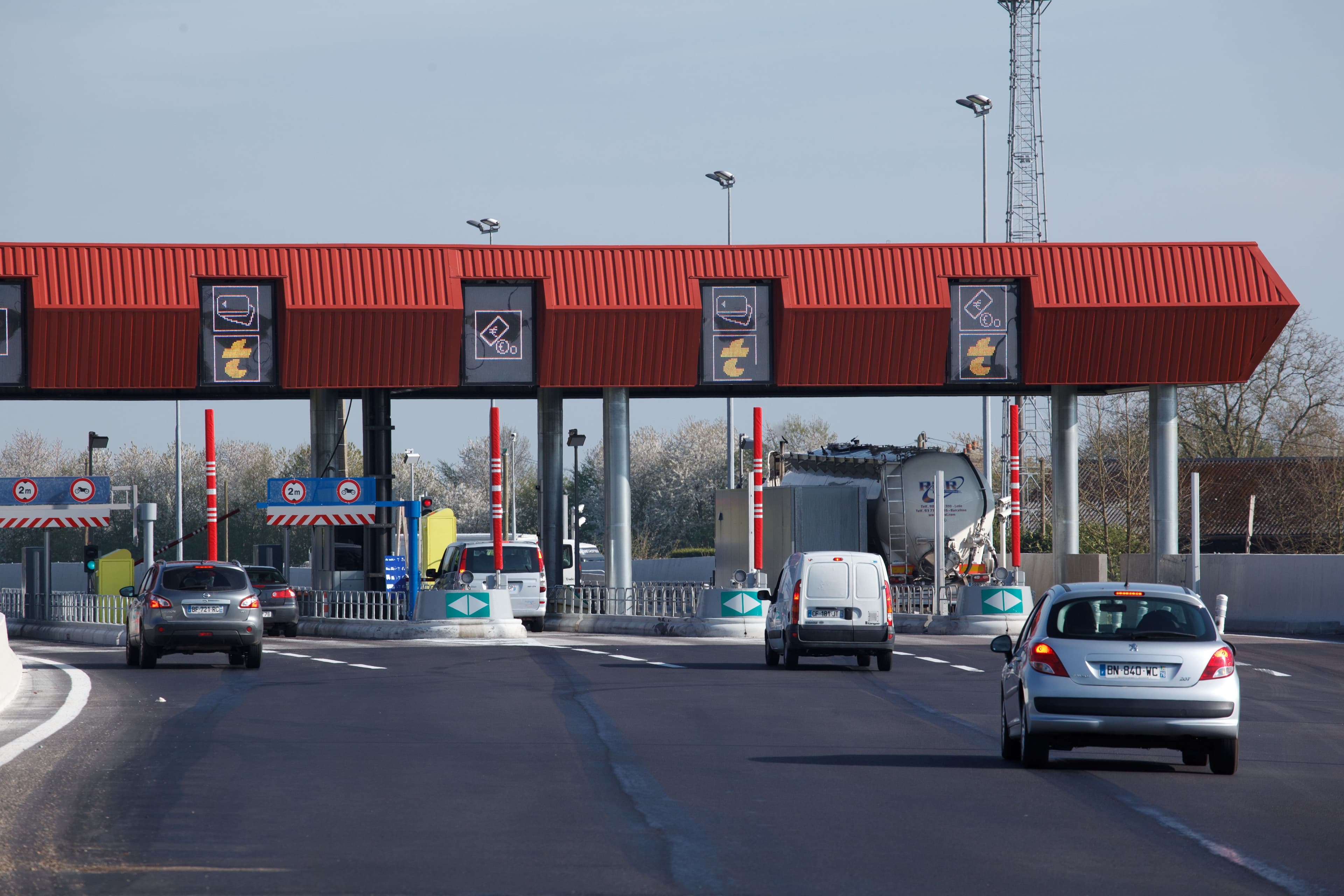
Before setting off on your journey, it’s helpful to know how to make the most of your Bip&Go pass. Whatever plan you’ve chosen, discover how to enjoy the motorway with total ease!
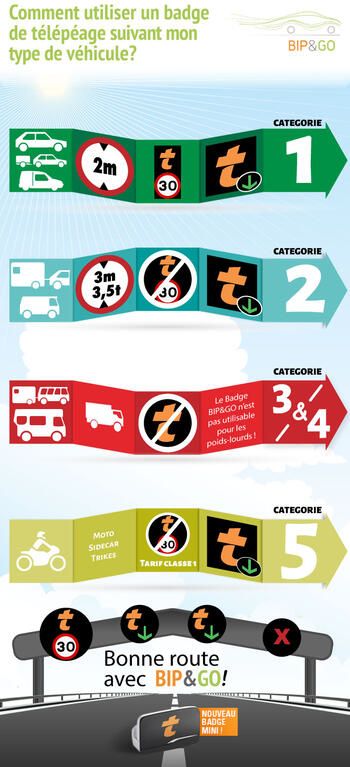
With your Bip&Go badge, you can choose from several options depending on how you use the motorway:
If you use the motorway occasionally, you can still enjoy all the benefits of electronic tolling. Discover the Bip&Go pay-as-you-go option, with no monthly subscription.
If you travel the motorway regularly or daily, the Bip&Go Liber-t pass offers a fixed-rate subscription for electronic tolling.
Whatever your usage or vehicle, you can enjoy all the benefits of the Liber-t Bip&Go badge, making your motorway journeys easier in every situation!
Depending on your vehicle class, you can use the Liber-t Bip&Go badge across the entire motorway network, with a few different scenarios:
If your vehicle is category 1 (car, car with light trailer, or small van), you can use the electronic toll lane limited to 30 km/h. Your badge will beep a few seconds before the barrier is raised to confirm it’s been detected.
If you have a category 2 vehicle (motorhome, van, or car with a high trailer), you can also use electronic tolling, but you’ll need to use a standard lane with a stop.
Motorhomes with trailers, and all vehicles over 3m high, fall into categories 3 and 4. In this case, you cannot use a Liber-t electronic toll badge.
If you’re a motorcyclist, you can also enjoy the benefits of electronic tolling. However, for safety reasons, we advise against using the fast toll lane. We recommend using a standard electronic toll lane with a stop to ensure your Liber-t Bip&Go badge is properly detected.
Class 1: Light vehicles
This category includes vehicles with a total height of 2 metres or less and a maximum authorised mass (GVW) of 3.5 tonnes or less, such as:
• Saloons, coupés, convertibles, estates, or MPVs;
• Small vans;
• Any of the above vehicles towing a trailer (with a total height of 2 metres or less).
Class 2: Intermediate vehicles
This category covers vehicles with a height between 2 and 3 metres and a GVW of 3.5 tonnes or less. Typically, this includes:
• Large vans;
• Most motorhomes;
• Pick-ups with a living unit;
• Class 1 vehicles towing a caravan or trailer with a total height between 2 and 3 metres (excluding load).
Class 3: Heavy goods vehicles, coaches, and other 2-axle vehicles
This category is for vehicles over 3 metres in height and with a GVW over 3.5 tonnes.
Class 4: Heavy goods vehicles and other vehicles with 3 axles or more
These are vehicles over 3 metres high, with a GVW over 3.5 tonnes and 3 or more axles. This category also includes vehicles towing a trailer with a height over 3 metres.
Class 5: Motorbikes, sidecars, and trikes
This covers two-wheeled vehicles (including sidecars), tricycles, and even quadricycles.
Find out more about vehicle classification at motorway tolls.




Services for private individuals
© 2026 BIP&GO - All rights reserved
Services for private individuals

Services for professionals
Bip&Go services
About Bip&Go
© 2026 BIP&GO - All rights reserved


